VAT Zero-Rating for a Foreign Customer: What SARS Examines
You’ve invoiced a foreign customer at a zero rate, but the South African Revenue Service (SARS) is questioning the VAT treatment. The customer’s overseas address does not settle the issue: VAT zero-rating depends on the actual supply, the applicable statutory conditions and the evidence supporting it.
That distinction is important when SARS proposes an adjustment. The first task is not simply to point to the customer’s overseas address. It is to reconstruct the supply and test whether the VAT treatment is supported by the facts and records.
Why a foreign customer is not the whole answer
VAT zero-rating means that a supply is treated at a zero rate where the applicable legal requirements are met. It is not a general rule that every supply to a person outside South Africa qualifies. The treatment depends on the kind of supply and the conditions that apply to it.
SARS may therefore look beyond who paid the invoice. It may ask what the business agreed to provide, who received the supply, how it was delivered, and where any relevant goods or services were used. The contract, communications and transaction records can help establish those facts.
VAT 404, the SARS guide for vendors, is a useful starting point for understanding VAT treatment. It does not mean every transaction involving a foreign customer has the same outcome. The terms and circumstances of the particular supply still need to be examined.
Start with the supply, not the address
Imagine a South African business invoices a customer whose registered address is overseas. That fact tells you something about the customer. It does not, on its own, explain what the business supplied or whether the supply meets the relevant conditions for zero-rating.
A careful review should establish the transaction’s substance. Was the business supplying goods, services or a combination? What did the parties agree would be delivered? Who was meant to receive the supply? Were there particular delivery, performance or use arrangements? The answers help identify which legal conditions need to be tested.
For example, where goods are involved, the documents and facts about delivery and movement may be important. For services, the work performed and the circumstances of its provision may need close attention. These are not shortcuts to a conclusion. They are questions that help identify which conditions and evidence are relevant to the actual transaction.
The contract is an important part of that picture, but it should not be read in isolation. An invoice may describe a service in broad terms, while project records, correspondence or delivery documents provide detail about what happened. If the documents do not align, that gap can make it harder to explain why the business applied a zero rate.
Build the evidence around the transaction
When SARS questions a VAT treatment, the response needs to connect the legal position to the underlying facts. A folder of documents is not automatically a persuasive explanation. The records should show, clearly and consistently, what was supplied, to whom, and how the transaction met the conditions relied on.
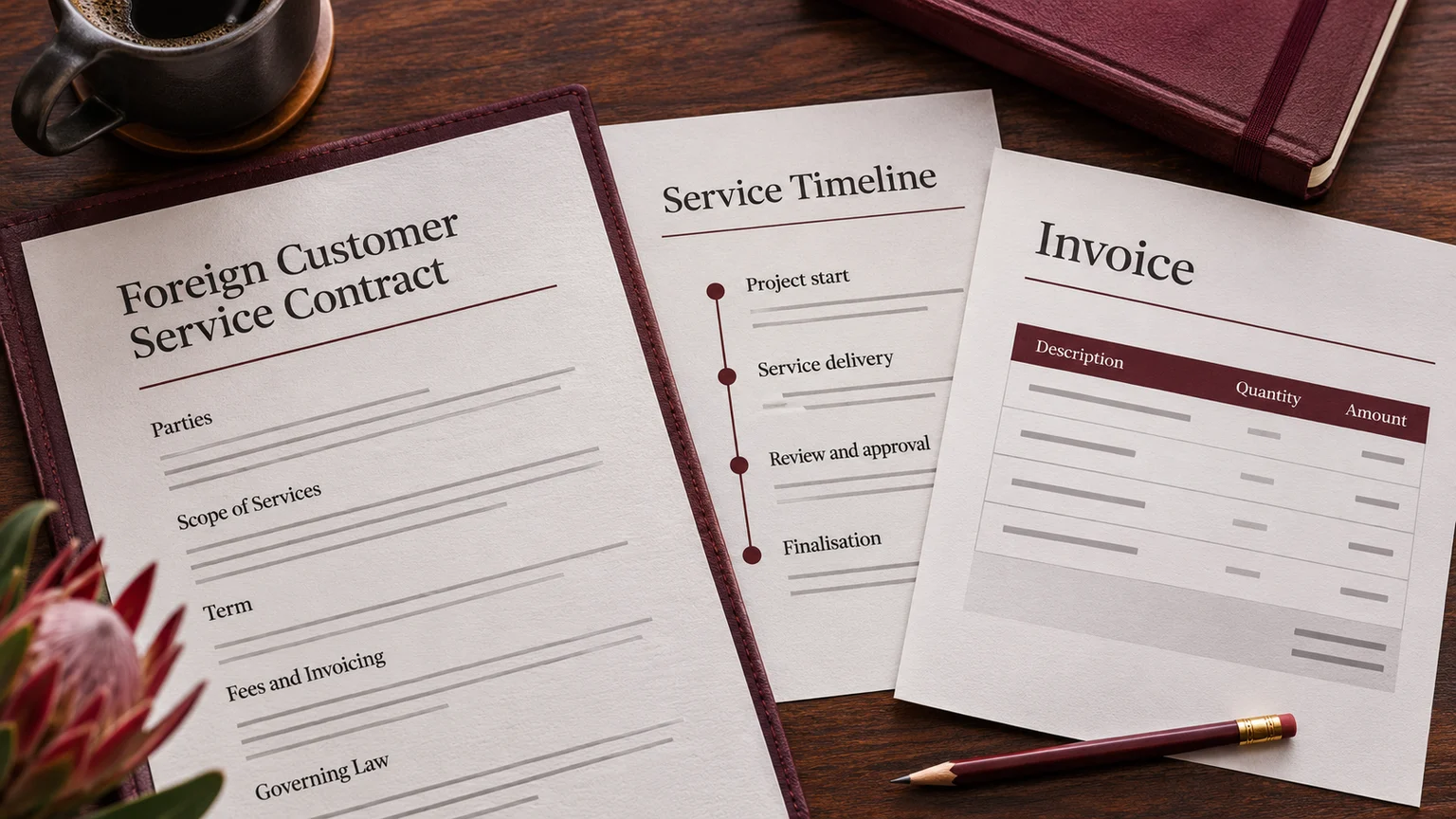
Depending on the transaction, relevant material may include the agreement, invoices, purchase orders, correspondence, proof of delivery, work records and documents showing how the supply was performed. The point is not to collect every document a business has. It is to identify records that establish the material facts and support the treatment applied.
It is also worth checking the chronology. When was the agreement made? What changed during performance, if anything? Do the invoice description and accounting records reflect the supply that the operational documents describe? A chronology can reveal whether an apparent disagreement with SARS is about the law, the facts, incomplete records or more than one of these.
That distinction matters because the best response depends on what is actually disputed. If SARS has misunderstood the transaction, the evidence may help correct the factual picture. If the facts are substantially agreed but the treatment is disputed, the response may need to address the applicable legal conditions. If documents are missing or inconsistent, that weakness needs to be assessed honestly rather than glossed over.
When SARS proposes an adjustment
A proposed VAT adjustment is not the same thing as proof that the original treatment was wrong. Nor does disagreement with the adjustment, by itself, establish that SARS is mistaken. First establish the stage the matter has reached: responding to proposed findings is different from challenging an assessment that has already been issued.
Read SARS’s correspondence carefully. Identify the transactions and periods in question, the reason given for the adjustment, and any facts or documents SARS says are absent or insufficient. Then compare that position with the contract, delivery or performance records, and the business’s explanation of the supply.
This helps distinguish between a disagreement over interpretation and a problem with the underlying evidence. It may also show that SARS is relying on an incomplete account of how the transaction was carried out. A response should address the issue raised, not merely repeat that the customer was based outside South Africa.
Where a formal dispute is appropriate, procedural steps have different purposes. A request for reasons seeks an explanation for an assessment; an objection challenges an assessment on stated grounds. A tax appeal is a further stage with its own procedural requirements. These steps should not be treated as interchangeable, and the appropriate approach depends on the assessment, the correspondence and the applicable rules. Grounds omitted from an objection cannot simply be assumed to be available later on appeal.
An objection does not automatically suspend payment. A suspension-of-payment request is separate, and making the request does not mean it has been approved. Where payment pressure is part of the problem, it needs to be considered alongside the dispute, not assumed to resolve itself when an objection is lodged.
A historical default needs a different assessment
Sometimes a business reviewing its records finds that it may have applied zero-rating incorrectly in earlier periods. That is not the same situation as receiving an assessment and disputing SARS’s conclusion. The former may involve a historical tax default; the latter is a challenge to an assessment. The options and consequences should not be blurred together.
A possible default should be assessed on its own facts before the business decides how to proceed. Relevant considerations may include the affected transactions and periods, the records available, and whether SARS is already aware of the issue. The Voluntary Disclosure Programme (VDP) is a separate mechanism from an objection, and potential relief is conditional. SARS’s awareness can affect the availability or viability of that route.
For that reason, a business should not treat disclosure as an automatic solution or make a submission before understanding the position. First establish what happened, what the records show and whether the issue concerns a newly discovered historical error, an existing assessment dispute, or both. The right next step is case-specific.
Make the next step fit the facts
For a material adjustment, the practical question is not simply whether the customer was foreign. It is whether the supply, contract, delivery or use and supporting records meet the conditions for the VAT treatment claimed, and whether the dispute has been handled through the right process.
Unicus Tax Specialists SA is a Pretoria-based specialist practice assisting businesses and professional advisers across South Africa and abroad with complex SARS disputes. Its approach brings the tax-law question, tax dispute evidence and procedural position together. A specialist case review can test both SARS’s reasoning and the business’s account, including weaknesses that need to be addressed before deciding how to proceed.
Have the VAT dispute reviewed against the evidence
Can the records support zero-rating for the disputed supply, and what procedural step is appropriate now? Share a case overview with Unicus Tax to arrange a confidential discussion of that question, the assessment and the supporting documents.